Plan 01
RapidSSL
₹2,052/year
Direct pricing- 256-bit encryption
- TLS 1.2 and 1.3
- DV, OV and EV options
- Single domain and wildcard options
- Browser compatibility
Annual: ₹2,052 · 3 years: ₹6,156
Buy an SSL certificate to protect visitor data, enable HTTPS and build trust across your website.
Encryption
256-bit
Protocols
TLS 1.2 / 1.3
Validation
DV, OV, EV
Secured by default
For websites that need trusted HTTPS security, from single domains to wildcard coverage.
Prices in INR. Every button takes you straight to that plan's Websvibe order page.
Plan 01
₹2,052/year
Direct pricingAnnual: ₹2,052 · 3 years: ₹6,156
Plan 02
₹8,280.20/year
Direct pricingAnnual: ₹8,280.20 · 3 years: ₹24,840.60
Plan 03
₹10,377.14/year
Direct pricingAnnual: ₹10,377.14 · 3 years: ₹31,131.42
Plan 04
₹43,013.20/year
Direct pricingAnnual: ₹43,013.20 · 3 years: ₹1,29,039.60
Plan 05
₹1,07,260.70/year
Direct pricingAnnual: ₹1,07,260.70 · 3 years: ₹3,21,782.10
Plan 06
₹1,07,260.70/year
Direct pricingAnnual: ₹1,07,260.70 · 3 years: ₹3,21,782.10
Plan 07
₹1,53,088.20/year
Direct pricingAnnual: ₹1,53,088.20 · 3 years: ₹4,59,264.60
Plan 08
₹15,619.20/year
Direct pricingAnnual: ₹15,619.20 · 3 years: ₹46,857.60
Plan 09
₹29,246.80/year
Direct pricingAnnual: ₹29,246.80 · 3 years: ₹87,740.40
Plan 10
₹46,018/year
Direct pricingAnnual: ₹46,018 · 3 years: ₹1,38,054
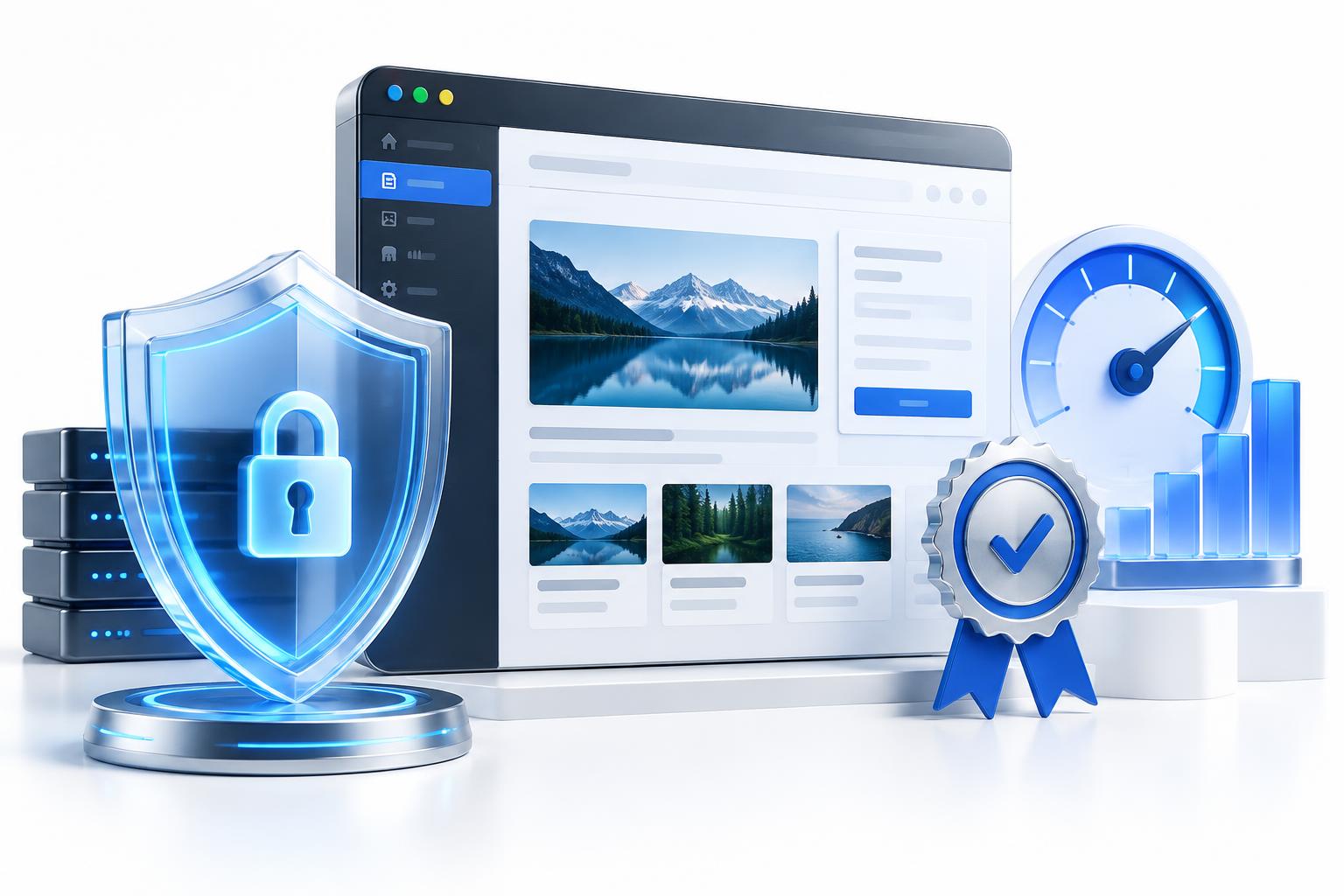
What Is an SSL Certificate? An SSL (Secure Sockets Layer) certificate is a digital security credential issued by a trusted Certificate Authority (CA). It authenticates your website's identity and enables an encrypted connection between your server and your visitors' browsers.
When an SSL certificate is installed, your website URL switches from HTTP to HTTPS — and a padlock icon appears in the browser bar. This tells users their connection is private and their data is protected.
While the original SSL protocol has been succeeded by TLS (Transport Layer Security), the term "SSL certificate" remains the widely used name for these security certificates across the industry.
The web has changed. Visitors expect secure websites. Search engines reward them.
Browsers penalize those without them. An SSL certificate for your website isn't just a nice-to-have — it's a fundamental requirement for operating online in today's environment.
Installing an SSL certificate eliminates all of these risks. It's one of the highest-impact, lowest-cost investments you can make for your website.
Without an SSL certificate installed on your site, here's what happens:
Chrome, Firefox, Safari, and Edge all display a "Not Secure" warning in the address bar — immediately eroding visitor trust.
Google de-prioritizes HTTP sites in search rankings, meaning your competitors with HTTPS are more likely to outrank you.
Visitors abandon unsecured sites. Studies show that over 85% of users will leave a website if it doesn't feel safe.
Data is transmitted in plain text, making it easy for attackers to intercept passwords, payment details, and personal information.
Understanding how SSL works helps you appreciate why it's so important. Here's a simplified breakdown of the SSL handshake process that takes place every time a visitor loads your site:
This entire process happens in milliseconds. Your visitors never notice it — but they do notice the padlock, and they trust it.
7. Improved Email Deliverability
Powerful Data Encryption
Verified Website Identity
Immediate Trust Signals
Better Google Rankings
PCI-DSS Compliance
Protection Against Phishing
Not all SSL certificates are the same. The right SSL certificate for your website depends on the type of site you're running, how much identity verification you need, and how many domains or subdomains you need to cover.
Domain Validation (DV) SSL Certificate The DV SSL certificate is the most popular and affordable type of SSL certificate. It confirms that you own the domain being secured — nothing more, nothing less. This makes it the fastest to issue (often within minutes) and the most cost-effective option for:
A DV SSL certificate provides the same 256-bit encryption as higher-tier certificates. The difference lies in the level of identity verification, not the encryption strength.
Organization Validation (OV) SSL Certificate An OV SSL certificate goes a step further by verifying both your domain ownership and your organization's legal identity. The Certificate Authority will confirm that your business is registered and legitimate before issuing the certificate. OV SSL certificates are ideal for:
OV certificates display your organization's verified details in the certificate information, giving sophisticated users an additional layer of assurance.
Extended Validation (EV) SSL Certificate An EV SSL certificate provides the highest level of identity verification available. The Certificate Authority conducts a rigorous vetting process that includes verifying your business registration, physical address, phone number, and operational status. EV certificates are best suited for:
A Wildcard SSL certificate secures your primary domain and an unlimited number of its subdomains under a single certificate. For example, one Wildcard SSL can cover:
This is a highly cost-effective option for businesses managing multiple subdomains.
Multi-Domain (SAN) SSL Certificate A Multi-Domain SSL certificate — also known as a Subject Alternative Name (SAN) certificate — allows you to secure multiple different domain names under one certificate.
This simplifies SSL management for businesses running several separate websites or web applications.
While not for websites directly, code signing certificates are a type of SSL security credential used by software developers to digitally sign applications, scripts, and executables — confirming they haven't been tampered with since they were signed.
Personal websites and blogs
Portfolio sites
Small business websites
Landing pages
Development and staging environments
Corporate websites
B2B platforms
Internal employee portals
Sites handling user accounts and sensitive data
Ecommerce and online retail stores
Financial institutions and banking platforms
Healthcare portals handling patient data
Government and legal websites
Any platform where maximum trust is critical
Wildcard SSL Certificate
yoursite.com
shop.yoursite.com
blog.yoursite.com
mail.yoursite.com
app.yoursite.com
Code Signing SSL Certificate
Google's algorithm has explicitly incorporated HTTPS as a ranking factor since 2014. In the decade since, the weight of this signal has only grown — particularly as Google's Chrome browser began flagging non-HTTPS sites as "Not Secure" for all users.
site, referral data is lost. Installing an SSL certificate ensures your analytics accurately reflect your traffic sources.
In short, a cheap SSL certificate isn't just a security purchase — it's an SEO investment with measurable, lasting returns.
Here's how an SSL certificate directly impacts your SEO:
HTTPS is a ranking signal. All other things being equal, a site with HTTPS will outrank an equivalent HTTP site.
Secure sites get more clicks. Users are less likely to click on search results that their browser subsequently flags as insecure.
Referral data is preserved. When traffic passes from an HTTPS site to an HTTP
Core Web Vitals integration. Google's page experience signals — which directly influence rankings — are evaluated in the context of whether a site is secure.
Yoast SEO and other tools flag missing HTTPS as a technical SEO issue. Installing an SSL certificate resolves this automatically.
Who Needs an SSL Certificate? The short answer: every website. But here's a more specific breakdown of who particularly benefits:
Ecommerce stores Protects payment data; required for PCI compliance
Blogs and personal sites Eliminates "Not Secure" browser warnings
If your website collects any information from visitors — even just a contact form name and email — you need an SSL certificate.
Website Type Why SSL Is Essential
Business websites Builds brand credibility and visitor trust
Membership and login portals Encrypts user credentials
Healthcare platforms Protects sensitive patient information
Educational institutions Secures student and staff data
Government websites Verifies authenticity and secures data
SaaS and web applications Encrypts all app-level data in transit
We know that installing an SSL certificate can feel technical if you haven't done it before. That's why our team is here to help you every step of the way.
Our support team is available 24/7 via live chat, email, and phone to assist with installation, configuration, and any technical questions.
Our SSL certificates meet or exceed all current industry standards:
Encryption: 256-bit AES symmetric encryption
Key length: 2048-bit RSA or 256-bit ECC public keys
Hashing algorithm: SHA-256
TLS versions supported: TLS 1.2 and TLS 1.3
Browser compatibility: 99.9%+ across all major browsers and devices
Certificate Authority: Issued by globally trusted CAs
Validation types available: DV, OV, EV
Coverage options: Single domain, Wildcard, Multi-Domain (SAN)
Reissuance: Free and unlimited
Warranty: Included on all certificate plans
Why Choose Us for Your SSL Certificate? There are plenty of places to buy SSL certificates online. Here's what sets us apart: Affordable pricing without compromising on quality. Our cheap SSL certificates use the same encryption technology as certificates sold at much higher price points. You're getting genuine SSL security — not a watered-down version.
Fast issuance. DV SSL certificates are typically issued within minutes of domain verification. You don't have to wait days to secure your site.
Trusted Certificate Authorities. Every SSL certificate we offer is issued by a globally recognized CA that is trusted by all major browsers and operating systems.
Expert 24/7 support. Our SSL specialists are available around the clock to help with choosing the right certificate, installation, renewal, and any technical issue you encounter.
One-stop hosting and SSL. Managing your hosting and SSL certificate in the same place simplifies billing, renewals, and support. No juggling multiple providers.
Free reissuance. Need to reinstall or reissue your certificate? We cover that at no extra cost for the life of your subscription.
Need help finding the right option? The Websvibe team can talk through your requirements.
Contact Websvibe